

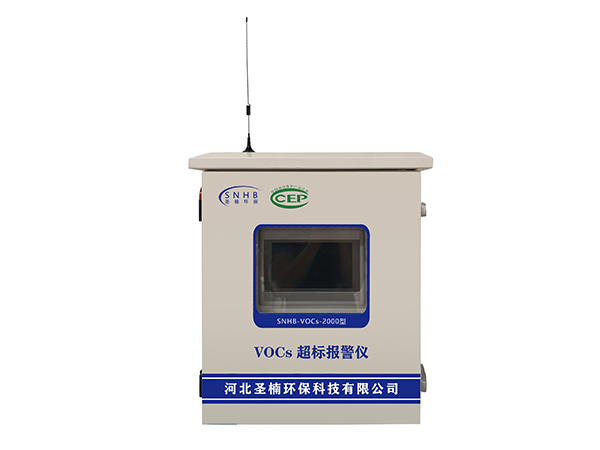
1. Product Overview
The VOC Online Monitoring System is designed for continuous, real-time, and automatic monitoring of volatile organic compounds (VOCs) in ambient air or industrial exhaust gases.
VOCs (Volatile Organic Compounds) are widely present in industrial production and daily life. Many VOCs are key precursors of photochemical smog and ozone pollution, and some are toxic, carcinogenic, teratogenic, or mutagenic, posing serious risks to both the environment and human health.
With increasingly strict environmental regulations worldwide, VOC emissions have become a critical regulatory indicator, making VOC online monitoring an essential solution for compliance monitoring, industrial park supervision, and environmental enforcement.
2. Detectable Gases and Parameters
Depending on emission sources and application scenarios, the VOC monitoring system can measure:
Key Monitoring Parameters
TVOC (Total Volatile Organic Compounds)
NMHC (Non-Methane Hydrocarbons)
BTEX: Benzene, Toluene, Ethylbenzene, Xylene
Halogenated hydrocarbons (e.g. Vinyl chloride)
Organic solvents: alcohols, ketones, esters, hydrocarbons
Industry-specific VOCs such as cyclohexanol and butene
Typical Emission Sources
Painting and coating processes
Printing and packaging industries
Petrochemical and pharmaceutical plants
Wastewater and waste treatment facilities
Fuel storage, transportation and gas stations
Catering and cooking exhaust emissions
3. Working Principle (PID Technology)
Photoionization Detection (PID) uses an ultraviolet (UV) lamp with photon energies of 10.6 eV (or 11.7 eV) as the ionization source. This high-energy UV radiation can ionize almost all organic compounds and some inorganic compounds in the air, while ensuring that the major components of air—such as N₂, O₂, CO₂, H₂O, CO, and CH₄—remain non-ionized, as their ionization potentials are significantly higher than 10.6 eV or 11.7 eV.
When the target gas enters the ionization chamber, it is exposed to UV radiation from the lamp. The originally stable molecular structures are ionized, generating positively charged ions and free electrons. Under the influence of an electric field, these charged particles produce a weak electrical current. By measuring the magnitude of this current, the concentration of the target substance in the air can be determined.
Different organic compounds have different ionization potentials. When irradiated with UV light of suitable energy, the target molecules are ionized to form charged particles. The resulting current generated by these ions is amplified by the detector and displayed by the instrument as a concentration level.
After passing through the electrodes, the ions rapidly recombine to form their original molecular structures. This detection process is non-destructive, meaning the gas recombines after detection without any change to its chemical properties, making PID technology well suited for long-term, continuous online monitoring.
4. System Configuration and Functions
System Components
Gas sampling and transmission unit
VOC online analyzer (PID sensor)
Data acquisition and communication system
Power supply and protection unit
Monitoring and management platform (optional)
Main Functions
24/7 continuous online monitoring
Automatic zero calibration
Sensor lifetime self-diagnosis
Real-time data display and transmission
Alarm for over-limit concentration and system faults
Data storage, analysis, and reporting
5. Key Advantages
Real-time and continuous monitoring
High stability for harsh industrial environments
Integrated monitoring, early warning and analysis
Suitable for organized and fugitive emissions
Supports centralized monitoring for industrial parks
The system can be integrated with sensor networks, automation systems, GIS, and big data platforms to enhance environmental safety management and emergency response capabilities.
6. Typical Applications
VOC Online Monitoring Systems are widely used in:
Chemical, pharmaceutical, coating, rubber and plastics industries
Printing, painting, furniture and wood processing plants
Automotive manufacturing and parts production
Oil storage, transportation and gas stations
Wastewater treatment plants and waste disposal facilities
Industrial parks, ports, warehouses and logistics centers
Exhibition halls, workshops, boiler rooms and other key areas
Additionally, industries closely related to daily life—such as electronics manufacturing, textiles, stationery, building materials, detergents, cosmetics, and cleaning products—also require effective VOC monitoring due to potential emission risks.