

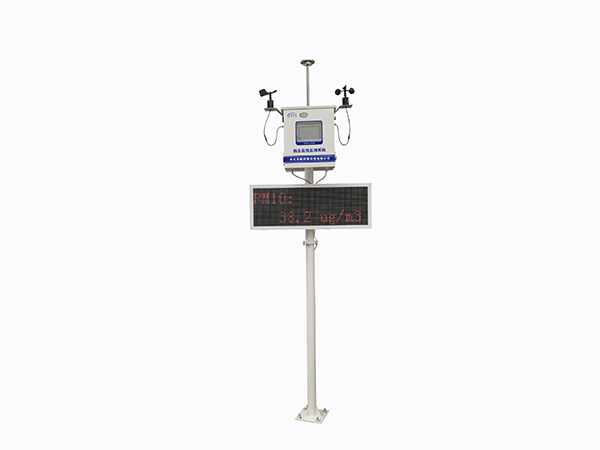
Industrial gas detector are mandatory safety devices specially used in industrial sites to real-time monitor the concentrations of flammable gases, toxic and harmful gases and oxygen in the environment. They can trigger audible and visual alarms immediately when gas concentrations exceed limits, fundamentally preventing serious safety accidents such as explosion, poisoning and suffocation. They are essential safety equipment for high-risk industries including petrochemical industry and municipal environmental protection.
1. Classification by application form
Portable detectors: Compact in size and wearable by workers. Suitable for confined space operations and temporary inspection. The mainstream 4-in-1 models can simultaneously measure four basic parameters: O₂, H₂S, CO and flammable gases. The battery life can exceed 20 hours, and the protection rating generally reaches IP65 or higher.
Fixed online detectors: Permanently installed at risk points such as workshops and tank farms for 24/7 continuous monitoring. They support remote data transmission via 4G / RS485 and can be directly linked with emergency equipment such as fans and emergency shut-off valves to form a full closed-loop of monitoring, early warning and response.
2. Classification by detection principle
Catalytic combustion type: Designed for flammable gas detection with a measuring range of 0–100%LEL and indication error ≤±3%LEL. It is the mainstream technical solution for flammable gas monitoring.
Electrochemical type: Used for detecting toxic gases such as hydrogen sulfide and carbon monoxide as well as oxygen. The oxygen measurement error can be controlled within ≤±0.5%VOL, accurately capturing the critical safety thresholds of 19.5%VOL for oxygen deficiency and 23.5%VOL for oxygen enrichment.
Infrared / PID photoionization type: Suitable for detection of high-concentration volatile organic gases. The sensors will not fail due to poisoning, featuring much higher accuracy and anti-interference performance than detectors adopting conventional principles.